
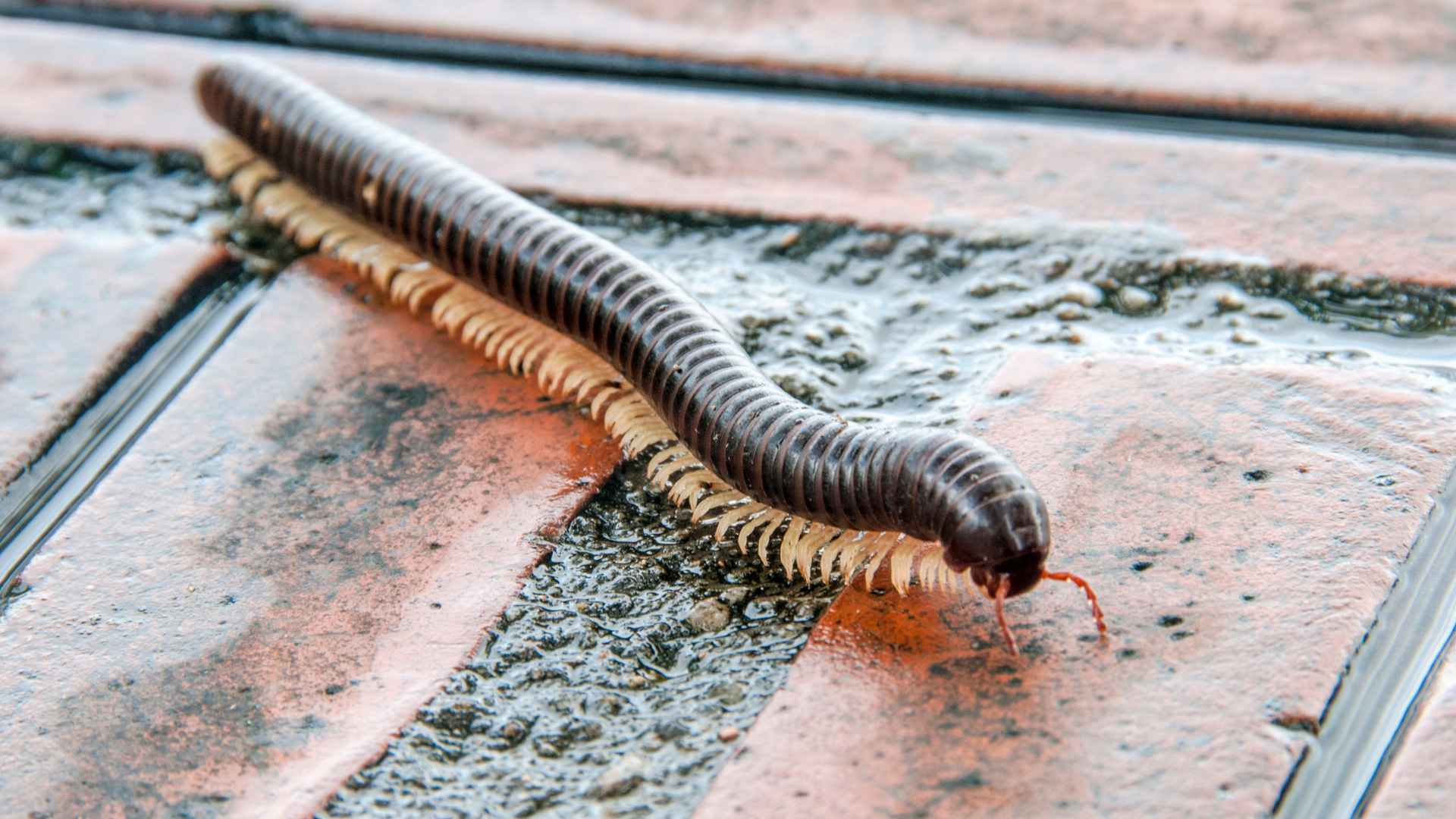
A sudden wave of millipedes on your porch or driveway after a rainstorm is common in Arkansas. One day there’s nothing, and the next there are dozens crawling across the concrete. Their sudden appearance has a clear explanation rooted in weather and moisture.
This guide answers the questions Arkansas homeowners ask most about millipedes. It also covers what actually keeps them from moving indoors.
What Are Millipedes and How Are They Different From Centipedes?
Millipedes and centipedes get confused constantly, but they behave very differently. Millipedes have rounded bodies with two pairs of legs per segment. They move slowly and curl into a tight coil when disturbed.
Centipedes look flatter, move fast, and have only one pair of legs per segment. They’re also predators that hunt other insects. Millipedes, on the other hand, feed on decaying plant matter and pose no threat to your home. Our Arkansas pest identification guide can help you tell the two apart at a glance.
Why Do Millipedes Suddenly Appear After Rain?
Millipedes breathe through their skin and need consistent moisture to survive. Heavy rain floods their usual homes in soil, mulch, and leaf litter, pushing them to the surface.
Once the ground becomes saturated, millipedes have nowhere left to go but up. That’s why you often see them crawling across sidewalks, driveways, and foundation walls right after a storm. They aren’t trying to invade your home. They’re simply escaping flooded soil in search of drier ground.
Why Does Mulch Attract Millipedes to My Yard?
Mulch beds create an ideal environment for millipedes, and that’s by design in a sense. Mulch holds moisture, breaks down slowly, and provides the organic material millipedes feed on.
-
Wood chip mulch piled thick against the house
-
Leaf litter left sitting for weeks near foundations
-
Compost piles close to exterior walls
-
Dense ground cover that traps humidity
The more mulch and organic debris sits against your foundation, the more millipedes gather nearby. That proximity is often what leads to a few wandering inside. Our guide on humidity and pests in Arkansas explains how moisture drives activity across many species.
Why Does Landscaping Play a Role in Millipede Activity?
Dense landscaping close to the home creates the shaded, damp conditions millipedes prefer. Thick shrubs, ground cover, and overgrown beds all trap moisture near the foundation.
Landscaping timbers and stacked stone borders add another layer to the problem. These features hold dampness underneath and give millipedes a place to hide during dry stretches. Pulling mulch and plants back a few inches from the foundation removes much of this appeal.
Why Does Moisture Around the Foundation Matter So Much?
Foundations that stay damp create a direct path for millipedes to reach your home’s exterior walls. Poor drainage, clogged gutters, and grading that slopes toward the house all contribute.
Water pooling near the foundation after rain gives millipedes exactly the environment they’re searching for. Fixing drainage issues and directing downspouts away from the house cuts off much of this moisture. Even small grading corrections can make a noticeable difference over time.
Do Millipedes Bite People or Damage Homes?
This question comes up often, and the answer should ease most concerns. Millipedes don’t bite, and they cause no structural damage to your home.
Millipedes can release a defensive fluid when threatened, which may cause mild skin irritation in sensitive individuals. Washing the area with soap and water usually resolves any irritation quickly. Beyond that, millipedes are considered a nuisance pest rather than a genuine threat.
Why Do I Keep Finding Dead Millipedes Indoors?
Millipedes that wander inside usually don’t survive long once they’re there. Indoor air lacks the humidity millipedes need to survive. Most dry out within a day or two.
Finding dead millipedes near doors, windows, or baseboards typically means they entered but couldn’t establish themselves. This is common after heavy rain events, when large numbers get pushed toward structures at once. It’s a sign of outdoor conditions driving activity, not an indoor infestation taking hold.
Does Millipede Activity Follow a Seasonal Pattern?
Millipede activity in Arkansas tends to spike during wet spring and fall months. These seasons combine the rainfall and mild temperatures millipedes need most.
Summer heat can dry out surface soil, pushing millipedes deeper underground where moisture remains. Activity often picks back up once cooler, wetter weather returns in autumn. Our guide on seasonal pests in Arkansas covers how these patterns shift throughout the year.
What Can Homeowners Do to Keep Millipedes Outside?
Since millipedes follow moisture, reducing dampness around your home solves most of the problem. A few consistent habits make a real difference over time.
Pull mulch and leaf litter back several inches from the foundation. Clean gutters regularly and make sure downspouts direct water away from the house. Fix any low spots in the yard where water tends to pool after rain. Trim back dense shrubs and ground cover touching exterior walls. Seal gaps around doors, windows, and utility lines to block casual wandering.
When Should You Call a Professional?
Occasional millipede sightings after heavy rain are usually nothing to worry about. But if large numbers keep appearing indoors or around entry points repeatedly, a closer look may help.
A professional inspection can identify moisture sources you might have missed around the foundation. Addressing those root causes tends to reduce millipede activity far more than treating the pests alone. Our knowledge hub has more resources on identifying pest patterns specific to Arkansas homes.
Keeping Millipedes From Becoming a Recurring Problem
Millipedes are harmless, but their sudden appearance often points to moisture conditions worth addressing. A wet yard or damp foundation will keep drawing them back season after season.
Managing mulch, fixing drainage, and trimming landscaping go a long way toward solving this at the source. Visit Nature Guard Pest & Lawn to learn more about keeping your Arkansas property comfortable year-round.